input handler for the SVG format More...
#include <parssvg.h>
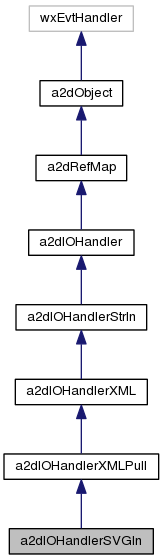
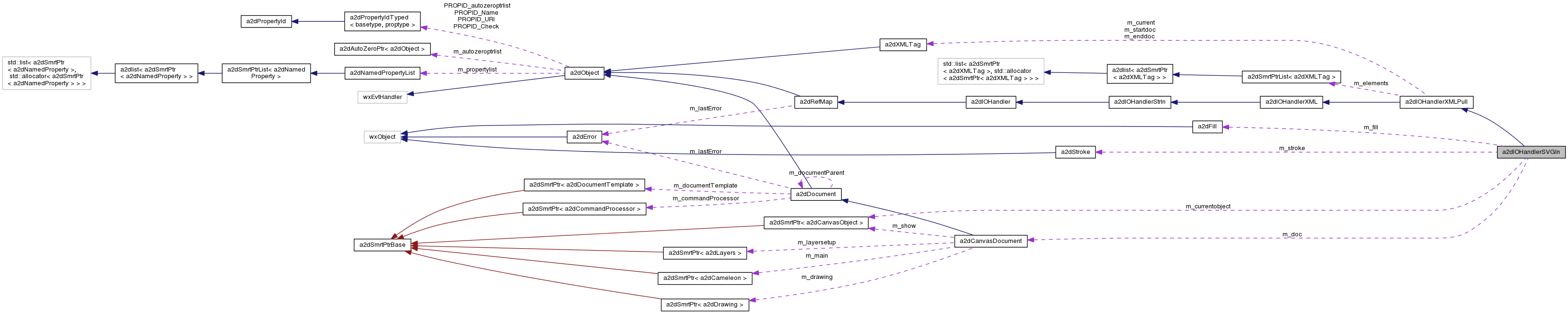
Public Member Functions | |
| virtual bool | CanLoad (a2dDocumentInputStream &stream, const wxObject *obj=NULL, wxClassInfo *docClassInfo=NULL) |
| Should return true if the handler can read from the stream. More... | |
| virtual bool | Load (a2dDocumentInputStream &stream, wxObject *doc) |
| override to read the stream and store (part of) the contents in to a specific a2dDocument or othere object. More... | |
 Public Member Functions inherited from a2dIOHandlerXMLPull Public Member Functions inherited from a2dIOHandlerXMLPull | |
| a2dIOHandlerXMLPull () | |
| Constructor. More... | |
| ~a2dIOHandlerXMLPull () | |
| Destructor. | |
| a2dXMLTag * | GetCurrentTag () |
| return the tag where the stream is situated | |
| virtual void | InitializeLoad () |
| Inits the IO handler for reading. More... | |
| virtual void | ResetLoad () |
| Reset the object after loading. | |
| void | Require (const XMLeventType &type, wxString name) |
| Forces a special tag. More... | |
| wxString | GetTagName () |
| Returns name of the current XML tag. More... | |
| wxString | GetContent () |
| Returns the current content. More... | |
| XMLeventType | GetEventType () |
| Returns the type of current event. More... | |
| int | GetDepth () |
| Returns depth. | |
| XMLeventType | NextTag () |
| Walks to next tag. More... | |
| XMLeventType | Next () |
| Walks to next element and returns event type. More... | |
| wxString | GetAttributeValue (const wxString &attrib, const wxString &defaultv=wxT("")) |
| Returns the value of an attribute. More... | |
| wxString | RequireAttributeValue (const wxString &attrib) |
| Forces an attribute and returns its string value. More... | |
| double | GetAttributeValueDouble (const wxString &attrib, double defaultv=0) |
| Returns the double value of an attribute. More... | |
| double | RequireAttributeValueDouble (const wxString &attrib) |
| Forces an attribute and returns its double value. More... | |
| int | GetAttributeValueInt (const wxString &attrib, int defaultv=0) |
| Returns the integer value of an attribute. More... | |
| wxUint16 | GetAttributeValueUint16 (const wxString &attrib, wxUint16 defaultv=0) |
| cast to wxUint16 of GetAttributeValueInt() | |
| wxUint32 | GetAttributeValueUint32 (const wxString &attrib, wxUint32 defaultv=0) |
| cast to wxUint32 of GetAttributeValueInt() | |
| int | RequireAttributeValueInt (const wxString &attrib) |
| Forces an attribute and returns its integer value. More... | |
| long | GetAttributeValueLong (const wxString &attrib, long defaultv=0) |
| Returns the long value of an attribute. More... | |
| long | RequireAttributeValueLong (const wxString &attrib) |
| Forces an attribute and returns its long integer value. More... | |
| bool | GetAttributeValueBool (const wxString &attrib, bool defaultv=false) |
| Returns the boolean value of an attribute. More... | |
| bool | RequireAttributeValueBool (const wxString &attrib) |
| Forces an attribute and returns its boolean value. More... | |
| bool | HasAttribute (const wxString &attrib) |
| Does the current tag have this attribute? | |
| void | SkipSubTree () |
| Skips all child elements / tags of current element / tag. | |
| virtual int | GetCurrentColumnNumber () |
| where in the input was column the current tag | |
| virtual int | GetCurrentLineNumber () |
| where in the input was line the current tag | |
| void | SetScale (double scale) |
| double | GetScale () |
| See GetScale() | |
| Public Member Functions inherited from a2dIOHandlerXML | |
| a2dIOHandlerXML () | |
| Constructor. More... | |
| ~a2dIOHandlerXML () | |
| Destructor. | |
| XML_Parser & | GetXMLParser () |
| Returns the XML parser. | |
| wxString | GetErrorString () |
| Returns last error as string. | |
| double | ParseDouble (const wxString &buffer, unsigned int &position) |
| void | SkipCommaSpaces (const wxString &buffer, unsigned int &position) |
| void | SkipSpaces (const wxString &buffer, unsigned int &position) |
| Public Member Functions inherited from a2dIOHandlerStrIn | |
| a2dIOHandlerStrIn (wxMBConv &conv=wxConvUTF8) | |
| constructor | |
| ~a2dIOHandlerStrIn () | |
| destructor | |
| wxClassInfo * | GetDocumentClassInfo () const |
| class info for the (document) class this handler reads data into. | |
| void | SetDocumentClassInfo (wxClassInfo *docClassInfo) |
| class info for the (document) class this handler reads data into. | |
| void | SetFileName (const wxFileName &filename) |
| const wxFileName & | GetFileName () const |
| Public Member Functions inherited from a2dIOHandler | |
| a2dIOHandler () | |
| constructor | |
| ~a2dIOHandler () | |
| destructor | |
| virtual wxObject * | CreateObject (const wxString &symbolicName) |
| Creates an specific object by name. More... | |
| Public Member Functions inherited from a2dRefMap | |
| a2dRefMap () | |
| constructor | |
| ~a2dRefMap () | |
| destructor | |
| virtual void | Initialize () |
| initialize mapping tables | |
| a2dHashMapIntToObject & | GetObjectHashMap () |
| This is used to find multiple referenced objects by id. | |
| a2dHashMapCreateObject & | GetObjectCreateHashMap () |
| has to map symbolic names to real classnames. | |
| a2dResolveIdList & | GetResolveIdList () |
| list of not resolved objects | |
| bool | ResolveOrAdd (a2dSmrtPtr< a2dObject > *storedHere, const wxString &id=wxT("")) |
| try to resolve the object that is in storedHere when it is a reference. More... | |
| bool | ResolveOrAdd (a2dAutoZeroPtr< a2dObject > *storedHere, const wxString &id=wxT("")) |
| try to resolve the object that is in storedHere when it is a reference. | |
| bool | ResolveOrAddLink (a2dObject *obj, const wxString &id=wxT("")) |
| try to resolve an object referenced by obj using the LinkReference function | |
| void | ResolveInform (a2dObject *obj) |
| call the objects LinkReference function (ptr=0) to inform it that links are done | |
| void | SetLastObjectLoadedId (const wxString &lastid) |
| set by RefObject when finding a reference id during loading. | |
| virtual bool | LinkReferences (bool ignoreNonResolved=false) |
| link references to their destination More... | |
| bool | RemoveReference (const wxString &idToRemove) |
| remove given reference if from reference map. | |
| a2dError | GetLastError () const |
| get last error encountered | |
| void | SetLastError (a2dError error) |
| set last error encountered | |
| Public Member Functions inherited from a2dObject | |
| virtual bool | ProcessEvent (wxEvent &event) |
| bool | SearchDynamicEventTable (wxEvent &event) |
| void | Connect (int winid, int lastId, int eventType, wxObjectEventFunction func, wxObject *userData=(wxObject *) NULL, wxEvtHandler *eventSink=(wxEvtHandler *) NULL) |
| bool | Disconnect (int winid, int lastId, wxEventType eventType, wxObjectEventFunction func=NULL, wxObject *userData=(wxObject *) NULL, wxEvtHandler *eventSink=(wxEvtHandler *) NULL) |
| void | ProcessConnectedEvent (wxEvent &event) |
| wxCHECK_VERSION(2,9,0) More... | |
| void | ConnectEvent (wxEventType type, wxEvtHandler *eventSink) |
| bool | DisconnectEvent (wxEventType type, wxEvtHandler *eventSink) |
| bool | DisconnectEventAll (wxEvtHandler *eventSink) |
| Remove all dynamic events in classA, going to classB (eventSink) More... | |
| a2dObject () | |
| constructor | |
| virtual | ~a2dObject () |
| destructor | |
| void | operator= (const a2dObject &other) |
| assignment operator | |
| int | GetOwnedBy () |
| like it to be protected, but this does not work with wxList macros More... | |
| virtual a2dObject * | SetNonDynamic () |
| Call to mark this object as non-dynamic (static/local/auto) More... | |
| void | CheckReferences () |
| Check zero reference count and delete if count is 0. More... | |
| a2dObject * | Clone (CloneOptions options, a2dRefMap *refs=NULL) const |
| create an exact copy of this property | |
| a2dObject (const a2dObject &other, CloneOptions options, a2dRefMap *refs) | |
| virtual wxString | GetName () const |
| Returns the name of this object, if no name is given the internal id will be returned. More... | |
| virtual void | SetName (const wxString &name) |
| Creates the a2dStringProperty PROPID_Name. More... | |
| virtual bool | IsTemporary_DontSave () const |
| Check if this is a temporary object, which should not be saved. | |
| void | SaveAsDocument (a2dIOHandlerXmlSerOut &out) |
| Save this object and all below as an XML document. More... | |
| virtual void | Save (wxObject *parent, a2dIOHandlerXmlSerOut &out, a2dObjectList *towrite) |
| write all needed to an XML type of file called the CVG format More... | |
| void | LoadFromDocument (a2dIOHandlerXmlSerIn &parser) |
| Load this object and all below from an XML document. More... | |
| virtual void | Load (wxObject *parent, a2dIOHandlerXmlSerIn &parser) |
| load object from CVG file More... | |
| wxInt64 | GetUniqueSerializationId () const |
| return a unique id for this object More... | |
| virtual bool | AlwaysWriteSerializationId () const |
| If true, always write an id. More... | |
| virtual bool | LinkReference (a2dObject *other) |
| link a reference in the object to the given value More... | |
| virtual void | ResolveInform () |
| inform an object that reference resolution was done More... | |
| void | Walker (wxObject *parent, a2dWalkerIOHandler &handler) |
| This is used to recursively walk through an object tree. | |
| void | SetCheck (bool check) |
| general flag use at will. More... | |
| bool | GetCheck () const |
| general flag use at will. | |
| void | SetRelease (bool value) |
| set release flag More... | |
| bool | GetRelease () const |
| get release flag More... | |
| a2dAutoZeroPtr< a2dObject > ** | GetAutoZeroPtrList () |
| return the list head pointer for autozero pointers to this object More... | |
| DECLARE_PROPERTIES () | |
| a2dNamedProperty * | GetProperty (const a2dPropertyId *propertyId, a2dPropertyId::Flags flags=a2dPropertyId::flag_none) const |
| get property on this object More... | |
| void | SetProperty (a2dNamedProperty *propertyHolder, a2dPropertyId::SetFlags flags=a2dPropertyId::set_none) |
| Set the property to the this object. More... | |
| void | SetProperty (const a2dNamedProperty &propertyHolder, a2dPropertyId::SetFlags flags=a2dPropertyId::set_none) |
| Set the property to the this object and if enabled, to all childs and object members. More... | |
| virtual a2dNamedProperty * | FindProperty (const a2dPropertyId *id, a2dPropertyId::Flags flags=a2dPropertyId::flag_none) |
| Find a dynamic property with given id in the property list. More... | |
| virtual const a2dNamedProperty * | FindProperty (const a2dPropertyId *id, a2dPropertyId::Flags flags=a2dPropertyId::flag_none) const |
| Find a dynamic property with given id in the property list. More... | |
| virtual bool | HasProperty (const a2dPropertyId *id, const wxString &stringvalue=wxEmptyString) const |
| Check if the object has a property with given id and string representation. More... | |
| virtual void | OnPropertyChanged (const a2dPropertyId *id) |
| This function is called after a property changed. More... | |
| virtual bool | EditProperties (const a2dPropertyId *id, bool withUndo=true) |
| edit properties of the object More... | |
| void | TakeOverProperties (a2dObject *from, a2dPropertyIdList *listOfIds) |
| Properties in the id list are taken from the given object, en set to this. More... | |
| wxURI | GetURI () const |
| quick way to get to PROPID_URI property More... | |
| void | SetURI (const wxURI &url) |
| quickly set a property PROPID_URI More... | |
| const a2dNamedPropertyList & | GetPropertyList () const |
| Get the Property List. More... | |
| bool | HasDynamicProperties () const |
| test if there are dynamic properties in the m_propertylist | |
| virtual bool | RemoveProperty (const a2dPropertyId *id, bool all=true) |
| This function is called by a2dPropertyId to remove a property from the list. More... | |
| void | RemoveTemporaryProperties () |
| remove all temporary properties | |
| virtual bool | AddProperty (a2dNamedProperty *property) |
| This function is called by a2dPropertyId to add a property to the list. More... | |
Protected Member Functions | |
| bool | LoadSvg (a2dCanvasDocument *doc) |
| bool | LoadSvgGroup (a2dCanvasObject *parent) |
| bool | LoadSvgAnchor (a2dCanvasObject *parent) |
| bool | LoadSvgGroupElement (a2dCanvasObject *parent) |
| bool | LoadSvgRect (a2dCanvasObject *parent) |
| bool | LoadSvgCircle (a2dCanvasObject *parent) |
| bool | LoadSvgEllipse (a2dCanvasObject *parent) |
| bool | LoadSvgText (a2dCanvasObject *parent) |
| bool | ParsePoints (a2dVertexList *points) |
| bool | LoadSvgPolygon (a2dCanvasObject *parent) |
| bool | LoadSvgPolyline (a2dCanvasObject *parent) |
| bool | LoadSvgLine (a2dCanvasObject *parent) |
| bool | ParsePathPoints (a2dVpath *points) |
| bool | LoadSvgPath (a2dCanvasObject *parent) |
| bool | LoadSvgImage (a2dCanvasObject *parent) |
| bool | ParseSvgTransForm (a2dCanvasObject *parent) |
| bool | ParseSvgStyle (a2dCanvasObject *parent) |
| bool | ParseSvgLink (a2dCanvasObject *parent) |
| Protected Member Functions inherited from a2dIOHandlerXMLPull | |
| virtual void | StartElementHnd (a2dXMLTag *tag) |
| virtual void | EndElementHnd (const wxString &name) |
| virtual void | CharacterDataHnd (const wxString &text) |
| virtual void | CommentHnd (const wxString &comment) |
| virtual void | DefaultHnd (const wxString &def) |
| void | FillQueue () |
| Reads next piece of document into buffer. | |
| Protected Member Functions inherited from a2dIOHandlerStrIn | |
| void | SetMode (wxEOL mode=wxEOL_NATIVE) |
| define the line end mode for textual files | |
| wxEOL | GetMode () |
| get line end mode for textual files | |
| char | Peek () |
| char | GetC () |
| a2dIOHandlerStrIn & | SeekI (wxFileOffset pos) |
| set stream at a position | |
| bool | Eof () const |
| bool | IsOk () const |
| size_t | Read (char *buffer, size_t size) |
| Protected Member Functions inherited from a2dObject | |
| virtual bool | DoIgnoreIfNotMember (const a2dPropertyId *id) const |
| used to decide if a property shall be ignored, if it is not a member More... | |
| virtual void | DoWalker (wxObject *parent, a2dWalkerIOHandler &handler) |
| iterate over this object and its children More... | |
Protected Attributes | |
| a2dCanvasDocument * | m_doc |
| the document to store/load the data found into | |
| a2dCanvasObjectPtr | m_currentobject |
| a2dFill | m_fill |
| currentfill style | |
| a2dStroke | m_stroke |
| currentstroke style | |
| Protected Attributes inherited from a2dIOHandlerXMLPull | |
| a2dSmrtPtrList< a2dXMLTag > | m_elements |
| queue of begin and end elements tags not yet processed | |
| int | m_depth |
| double | m_scale |
| a2dXMLTag * | m_startdoc |
| a2dXMLTag * | m_enddoc |
| a2dXMLTag * | m_current |
| current XML tag | |
| Protected Attributes inherited from a2dIOHandlerXML | |
| XML_Parser | m_parser |
| expat parser | |
| char * | m_buffer |
| buffer used for passing part of the input stream | |
| bool | m_done |
| true if reached end of document | |
| Protected Attributes inherited from a2dIOHandlerStrIn | |
| wxFileName | m_filename |
| wxMBConv & | m_conv |
| unicode conversion | |
| a2dDocumentInputStream * | m_streami |
| file or other string stream containing the format to parse. | |
| wxClassInfo * | m_docClassInfo |
| Run-time class information that allows document instances to be constructed dynamically. | |
| wxEOL | m_mode |
| end of line mode | |
| Protected Attributes inherited from a2dRefMap | |
| a2dHashMapIntToObject | m_objecthashmap |
| This is used to find multiple referenced objects by id. | |
| a2dHashMapCreateObject | m_objectCreate |
| This is used to find a classname using a symbolic name. | |
| a2dResolveIdList | m_toResolve |
| refernces to object which have not bin resolved yet ( e.g not read yet, but already referenced ) | |
| wxString | m_lastObjectId |
| a2dError | m_lastError |
| set to last error found when parsing | |
| Protected Attributes inherited from a2dObject | |
| a2dNamedPropertyList | m_propertylist |
| properties | |
| int | m_refcount |
| how many references to this object do exist | |
| bool | m_check: 1 |
| used for linking multiple referenced objects when serializing | |
| bool | m_release: 1 |
| when set object is treated as being deleted, and wil be deleted in idle time. | |
| bool | m_recursion_active: 1 |
| this is used as a recursion stopper | |
| bool | m_pendingDisconnects: 1 |
| unsigned int | m_iteratorCount |
| a2dAutoZeroPtr< a2dObject > * | m_autozeroptrlist |
| this is a list of all a2dAutoZeroPtr object pointing to this object | |
Additional Inherited Members | |
| Public Types inherited from a2dObject | |
| enum | CloneOptions { clone_members = 0x00000001, clone_properties = 0x00000002, clone_childs = 0x00000004, clone_unused = 0x00000008, clone_setoriginal = 0x00000010, clone_seteditcopy = 0x00000020, clone_noReference = 0x00000040, clone_noCameleonRef = 0x00000080, clone_toDrag = 0x00000100, clone_flat = 0x00000000, clone_deep = clone_members | clone_properties | clone_childs } |
| options for cloning More... | |
| typedef a2dAutoZeroPtr< a2dObject > | TAutoZeroPtrListClass |
| this is needed inside the smart pointer template code | |
| Static Public Attributes inherited from a2dObject | |
| static a2dPropertyIdBool * | PROPID_Check = NULL |
| used for linking multiple referenced objects when serializing | |
| static a2dPropertyIdUri * | PROPID_URI = NULL |
| attach an URL to the object | |
| static a2dPropertyIdString * | PROPID_Name = NULL |
| Name property, to return name of this object. | |
| static a2dPropertyIdVoidPtr * | PROPID_autozeroptrlist = NULL |
| static const a2dSignal | sm_Edit_properties = wxNewId() |
| edit properties event, see EditProperties() | |
| Protected Types inherited from a2dObject | |
| enum | { refcount_nondynamic = 0x76543210 } |
| special refcount value for non-dynamic objects | |
| Static Protected Member Functions inherited from a2dIOHandlerXML | |
| static void | BaseStartElementHnd (void *userData, const char *name, const char **atts) |
| static void | BaseEndElementHnd (void *userData, const char *name) |
| static void | BaseCharacterDataHnd (void *userData, const char *s, int len) |
| static void | BaseCommentHnd (void *userData, const char *data) |
| static void | BaseDefaultHnd (void *userData, const char *s, int len) |
| Static Protected Attributes inherited from a2dIOHandlerXML | |
| static wxString | m_encoding = wxT( "UTF-8" ) |
| static wxString | m_version = wxT( "1.0" ) |
Detailed Description
Member Function Documentation
|
virtual |
Should return true if the handler can read from the stream.
A typical implementation is to read the first part of the file, to see if the contents is right for this handler. Then it resets the file pointer to the beginning again.
In general a handler is written with a certain type of document in mind, since that is where the information will be stored. The document view framework, uses document templates to get to input handlers. The last 2 parameters can be checked if set. Use SetDocumentClassInfo() to set the right classinfo, in case of a derived document object, which still can be read with the this handler. Like:
- Parameters
-
stream the open stream which its header can be tested obj to check and load the data into, needs to be casted to the right one internal. docClassInfo to check if the inout handler is indeed able to read document of m_docClassInfo.
Implements a2dIOHandlerStrIn.
Definition at line 58 of file parssvg.cpp.
|
virtual |
override to read the stream and store (part of) the contents in to a specific a2dDocument or othere object.
Understand that a a2dDocument itself is useless for storing data, so it needs to be casted internal.
- Parameters
-
stream the open stream to load from obj to load the data into, needs to be casted to the right one internal.
Implements a2dIOHandlerStrIn.
Definition at line 87 of file parssvg.cpp.
|
protected |
!todo shoud be EllipticalArcSegment?
Definition at line 1105 of file parssvg.cpp.
|
protected |
The documentation for this class was generated from the following files: